I don't know why, but I'm obsessed with weight loss. I think unpacking this obsession is going to take more than one post, so lets think of this as the first chapter in a continuing discussion. Personally... I guess I've always been attracted to a challenge. As a kid I wanted to get addicted to cigarettes just so I could be strong and show everyone that I could quit (I swear I truly remember having these thoughts on a regular basis). I still see a lot of evidence of this attraction to challenges in my life right now. For example, unlike many women I find myself slightly more attracted to men whom I have to chase. I'm turned off when men are too easily "won." But anyway, I'm aware of this romanticized idea I have of challenging situations... which can easily be applied to weight loss. My first instinct is that successful weight loss is a result of perseverance, willpower, and strength of character... and I'm well aware that the flip side of this statement involves blaming unsuccessful weight loss on weakness and a few other undesirable characteristics. I need to examine this, however, because there are a variety of factors that influence this view.
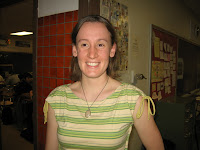
Personally... I have always been thin but in the last year I have lost about 20 pounds and am keeping it off quite easily (I actually lost a few more pounds accidentally since becoming a vegetarian... oops). But, I am proud of my body and my health; I feel like it is something I have worked for and accomplished. I don't want anyone to look down on that accomplishment as nothing special just because I had "thin / active" genes to start with. This is an initial, almost defensive reaction. On the other hand, I have no idea what it's like to really struggle with my weight. (My 20 pound weight loss brought me from 137 to 117... both of which are well within the healthy range for my 5'6 frame). My parents and my brother are all thin, healthy, and quite active. I can look around me and confidently say that the chances of me ever being overweight are slim to none. The moral of my personal story is that I don't want choices, will-power, and strength of character to be written off as contributing to health or obesity... but I also have no clue how much of my personal experience can be related to what others experience.
The inspiration for this reflection came from a television program that I taped the other night (because... as I said... I'm obsessed with weight loss) called I can make you thin. This show featured a British man named Paul McKenna who continually boasted that he had the golden rules for simple, permanent weight loss. I did like the rules that McKenna suggested because they seemed to be encouraging people to eat more consciously and enjoy their eating experience more. I believe that both of these are very important in order to have a healthy relationship with food. The thing that kept getting to me was how he reiterated how easy his program would be. He also told the audience over and over again that it was not their fault they were overweight. Is this the most productive way to think of the obesity epidemic? There's a quick fix out there and individuals really don't play any role in the epidemic... everyone is just a victim? I don't know.
Where's the line between crazy Mississipi legislation that makes it ok to discriminate against people to encourage them to loose weight (ultimately trying to emphasize personal responsibility for weight loss) and telling people who are overweight that they are not at fault and have just been innocent victims for years? Neither seem to be productive approaches to me, but where's the happy medium?
Showing posts with label Rational Choice. Show all posts
Showing posts with label Rational Choice. Show all posts
Monday, March 17, 2008

Monday, March 10, 2008
The convenience factor
Well... I took a few minutes and wrote the last post about shopping for the girls' track team. I did eventually find a grocery store that accepted the credit card I had and I got so excited to run around the store and fill my cart with lots of good things. I was able to pick up a ton of fruit as well as wheat bread, peanut butter, jelly, and granola bars. I really felt accomplished and felt as thought I was doing something positive for the students in a variety of different ways. First, they would be able to compete better because their stomachs wouldn't be filled with greasy burgers. Second, in a community that is so hard hit by the obesity / diabetes epidemic, I feel as though even the smallest opportunities to model and teach healthy habits are helpful. Plus, of course, healthy food is something I'm passionate about and sharing that feels great.
The kids seemed generally appreciative of the food choices. Especially the fruit. The girls loved the grapes, the apples and the oranges disappeared pretty quickly, and there were a few mumblings about a lack of bananas... good to know... I'll add them to the list. The sandwiches, however, were not a hit. Everyone liked the idea of peanut butter and jelly (some liked the idea of one without the other, you know how it goes...) but because they actually had to assemble their own sandwiches... NOBODY ATE ANYTHING! I was pretty shocked. There were kids who were really hungry by the end of the day and I guarantee that if there had been a cooler full of pre-made PB&J everyone would have gone to town on it. Instead they didn't eat any of it... too much work to make their own sandwich.
I guess I shouldn't have been that surprised, I did just finish reading Mindless Eating by Brian Wansink. Clearly, the choices that people make are not always rational, but how do you combat those choices? For example, one could argue that to truly feed yourself a healthy diet, you need to cook. Cooking involves time, work, energy, and... doing the dishes (EEK!). But people are lazy and the many will make their choices based on convenience rather than logic. Does that mean that the new single serving, microwaveable veggies are the best way to convince people to eat healthier? Would a fast food restaraunt that serves "rabbit food" in a quick, convenient way profit and improve America's health?
I don't know. Next time I'm going to recruit some of the free manual labor that I have at my disposal (aka my students) to make up sandwiches in advance.
The kids seemed generally appreciative of the food choices. Especially the fruit. The girls loved the grapes, the apples and the oranges disappeared pretty quickly, and there were a few mumblings about a lack of bananas... good to know... I'll add them to the list. The sandwiches, however, were not a hit. Everyone liked the idea of peanut butter and jelly (some liked the idea of one without the other, you know how it goes...) but because they actually had to assemble their own sandwiches... NOBODY ATE ANYTHING! I was pretty shocked. There were kids who were really hungry by the end of the day and I guarantee that if there had been a cooler full of pre-made PB&J everyone would have gone to town on it. Instead they didn't eat any of it... too much work to make their own sandwich.
I guess I shouldn't have been that surprised, I did just finish reading Mindless Eating by Brian Wansink. Clearly, the choices that people make are not always rational, but how do you combat those choices? For example, one could argue that to truly feed yourself a healthy diet, you need to cook. Cooking involves time, work, energy, and... doing the dishes (EEK!). But people are lazy and the many will make their choices based on convenience rather than logic. Does that mean that the new single serving, microwaveable veggies are the best way to convince people to eat healthier? Would a fast food restaraunt that serves "rabbit food" in a quick, convenient way profit and improve America's health?
I don't know. Next time I'm going to recruit some of the free manual labor that I have at my disposal (aka my students) to make up sandwiches in advance.
Monday, March 3, 2008
Wine Snobs and Conspicuous Consumption
Currently I am reading two books. The first one I started is Appetite for Profit by Michele Simon. While I tend to agree with much of what Simon discusses in the book, I am having a hard time getting through it because the organization is too S for my tastes (according to multiple Myers-Briggs tests I am a very strong N... not a surprise to anyone who has had a real conversation with me) and I feel that she is repeating the same argument over and over again. Corporations cannot be trusted to do anything in the interest of public health because they are more concerned with profit. I get that. But anyway... because of great recommendations I plan to continue through Simon's book... but while I do that I decided to start Brian Wansink's Mindless Eating.
First, a little background, Wansink is currently a professor of consumer behavior at Cornell University. This specialization has him dabbling in the fields of Economics, Behavioral Psychology, Business, and a variety of other fascinating subjects. (He also just happens to be a professor in the Applied Econ program that keeps floating around in the back of my head as a possibility here soon...) But, Wansink conducts experiments at his Food and Brand Lab where he tries to figure out how different environmental factors influence what and how much we eat. Mindless Eating is a great book for anyone who is trying to lose weight, because it points out a number of unhealthy habits we have. Eat on smaller plates. Eat slowly. Create a positive atmosphere. Replace short fat drinking glasses with tall skinny ones. All of these can be used to effectively trim calories from your daily consumption. More than just a diet book, however, it is very interesting and slightly depressing to realize vulnerable our food choices are to environmental factors. I also love the fact that this book applies quantitative, scientific analysis to our food choices.
I just finished reading a chapter entitled "Name Game." Wansink talks about how our enjoyment of food is shaped significantly before we taste it by the name of the menu item or the label on the bottle of wine. He provides a number of references to support this claim. He ends up talking about wines, citing the fact that very few people can actually distinguish good wine from great wine, and most choose a bottle by first choosing a price range. "Well, this is a nice party and she's a good friend so I should spend about $15 on the bottle of wine I bring..." As often as I am currently surrounded by people who talk as if they could distinguish a California Merlot from a Chilean Cabernet... I'm not so sure they could. I'm not ignorant when it comes to wine, but I know my palette cannot make that distinction. Wansink brings this point up and argues that the enjoyment is influenced by expectations, but another big red wine flag went up for me as I was reading this part.
How closely can Veblen's theory of conspicuous consumption be applied to our eating decisions? (For a quick, game theory enhanced overview of this theory check out my college project Conspicuous Consumption, I would also highly recommend reading up on the "Special Applications" at the bottom of the page!) Isn't choosing the wine to bring to a party based on price an example of someone who is trying to consume in order to fit into a certain social group? Wansink also discusses how eating in groups tends to encourage both heavy eaters and light eaters to forgo their extreme habits and mirror the habits of the group (discussed in "Mindless Eating Scripts" page 96). Another example in which people are literally consuming in a way that helps them attain a certain status or acceptance. This is exactly what Veblen was referring to except food consumption actually goes into your body as opposed to consumption of clothes, vehicles, or houses which just goes around it.
I have little doubt that these conspicuous consumption ideas can be applied to wine snobs, organic eaters, vegetarians, locavores, or a variety of other high end labels that people define themselves with. We may not readily admit it, but there is a level of pride and belonging when one chooses to shop at Trader Joe's every week or decides to order the garden burger instead of the prime rib sandwich. But I'm not sure one could apply this idea as easily to the populations who struggle with obesity. Does a young man of color choose to gorge on Whoppers and fries and become obese because he wants to identify with a certain social group? I don't know. I suppose I just need to do more research to see how Veblen addresses those at the other end of the conspicuous consumption spectrum.
First, a little background, Wansink is currently a professor of consumer behavior at Cornell University. This specialization has him dabbling in the fields of Economics, Behavioral Psychology, Business, and a variety of other fascinating subjects. (He also just happens to be a professor in the Applied Econ program that keeps floating around in the back of my head as a possibility here soon...) But, Wansink conducts experiments at his Food and Brand Lab where he tries to figure out how different environmental factors influence what and how much we eat. Mindless Eating is a great book for anyone who is trying to lose weight, because it points out a number of unhealthy habits we have. Eat on smaller plates. Eat slowly. Create a positive atmosphere. Replace short fat drinking glasses with tall skinny ones. All of these can be used to effectively trim calories from your daily consumption. More than just a diet book, however, it is very interesting and slightly depressing to realize vulnerable our food choices are to environmental factors. I also love the fact that this book applies quantitative, scientific analysis to our food choices.
I just finished reading a chapter entitled "Name Game." Wansink talks about how our enjoyment of food is shaped significantly before we taste it by the name of the menu item or the label on the bottle of wine. He provides a number of references to support this claim. He ends up talking about wines, citing the fact that very few people can actually distinguish good wine from great wine, and most choose a bottle by first choosing a price range. "Well, this is a nice party and she's a good friend so I should spend about $15 on the bottle of wine I bring..." As often as I am currently surrounded by people who talk as if they could distinguish a California Merlot from a Chilean Cabernet... I'm not so sure they could. I'm not ignorant when it comes to wine, but I know my palette cannot make that distinction. Wansink brings this point up and argues that the enjoyment is influenced by expectations, but another big red wine flag went up for me as I was reading this part.
How closely can Veblen's theory of conspicuous consumption be applied to our eating decisions? (For a quick, game theory enhanced overview of this theory check out my college project Conspicuous Consumption, I would also highly recommend reading up on the "Special Applications" at the bottom of the page!) Isn't choosing the wine to bring to a party based on price an example of someone who is trying to consume in order to fit into a certain social group? Wansink also discusses how eating in groups tends to encourage both heavy eaters and light eaters to forgo their extreme habits and mirror the habits of the group (discussed in "Mindless Eating Scripts" page 96). Another example in which people are literally consuming in a way that helps them attain a certain status or acceptance. This is exactly what Veblen was referring to except food consumption actually goes into your body as opposed to consumption of clothes, vehicles, or houses which just goes around it.
I have little doubt that these conspicuous consumption ideas can be applied to wine snobs, organic eaters, vegetarians, locavores, or a variety of other high end labels that people define themselves with. We may not readily admit it, but there is a level of pride and belonging when one chooses to shop at Trader Joe's every week or decides to order the garden burger instead of the prime rib sandwich. But I'm not sure one could apply this idea as easily to the populations who struggle with obesity. Does a young man of color choose to gorge on Whoppers and fries and become obese because he wants to identify with a certain social group? I don't know. I suppose I just need to do more research to see how Veblen addresses those at the other end of the conspicuous consumption spectrum.
Friday, February 22, 2008
Utility
As I may have mentioned in a previous post, one of the possibilities I'm considering is pursuing higher education in the field of Economics. It was my major in undergrad and I absolutely loved it. I have become obsessed with food and nutrition since then so I am also considering pursuing that, but I realized recently that I can combine those two interests. I could study food marketing and production in an applied or agricultural economics program. It could work out very well... only I know next to nothing about the field.
Anyway... the point of this entry. Economics is a very curious social science that does its best to quantify choices... which can be very difficult to quantify. One of the tools economists use is this very general term known as utility... or the pleasure and individual takes from certain consumption decisions. It seems as though this might be a great way to account for preferences and everything else, but the problem is, who really knows why they enjoy all of the things they do? I've been applying this idea a lot and trying to figure out why I do the things that I do (in regards to food that is) and what motivates me to make healthy decisions while many other people make very different decisions.
Example: Tonight I had an eggplant "curry-like" dish with tofu for dinner. (Contains the following - eggplant, onion, cauliflower, lentils, tomatoes, garlic, and indian spices). To be honest, it was kind of tasteless... definitely not bad but definitely not spectacular. Regardless of the finished product, I was so excited to have made it. I told all of my coworkers that I made eggplant curry and I looked forward to reheating the leftovers and tasting the mediocre meal again today. Despite the taste, I took great pleasure from that curry which means that my utility from eating is not derived purely from taste.
Now, this is going to be far from a definitive list, but here's where I think my food utility comes from:
Nutrition - There were lots of different veggies in my curry... meaning I ate a more varied diet this week than I would have without that dish. Plus, there wasn't anything "bad for me" in my curry. That made me feel like I was doing something great.
Exploration and culinary growth - I learned a new way to cook eggplant (roast it in the oven for a while and then scoop the insides into a dish of your choosing)... this makes me feel as though I'm actually becoming a better cook.
Productivity - If I've had a tough day at school, nothing will improve my mood more than making something with my hands. I like being productive; I feel good about myself when I can do that. Cooking is a great outlet for that type of stuff.
Taste - of course I want something that tastes great in addition to all of the above.
I suppose that this is something I need to do some more research on, but the economic concept of utility very complex. The pleasure I take from food is very complex... I can't imagine trying to analyze the pleasure everyone else takes from food. Are there any patterns? Are these innate preferences of have I been shaped by my surroundings? Basically, why do I eat the way I do and why do others eat the way they do?
Research suggestions appreciated.
Anyway... the point of this entry. Economics is a very curious social science that does its best to quantify choices... which can be very difficult to quantify. One of the tools economists use is this very general term known as utility... or the pleasure and individual takes from certain consumption decisions. It seems as though this might be a great way to account for preferences and everything else, but the problem is, who really knows why they enjoy all of the things they do? I've been applying this idea a lot and trying to figure out why I do the things that I do (in regards to food that is) and what motivates me to make healthy decisions while many other people make very different decisions.
Example: Tonight I had an eggplant "curry-like" dish with tofu for dinner. (Contains the following - eggplant, onion, cauliflower, lentils, tomatoes, garlic, and indian spices). To be honest, it was kind of tasteless... definitely not bad but definitely not spectacular. Regardless of the finished product, I was so excited to have made it. I told all of my coworkers that I made eggplant curry and I looked forward to reheating the leftovers and tasting the mediocre meal again today. Despite the taste, I took great pleasure from that curry which means that my utility from eating is not derived purely from taste.
Now, this is going to be far from a definitive list, but here's where I think my food utility comes from:
Nutrition - There were lots of different veggies in my curry... meaning I ate a more varied diet this week than I would have without that dish. Plus, there wasn't anything "bad for me" in my curry. That made me feel like I was doing something great.
Exploration and culinary growth - I learned a new way to cook eggplant (roast it in the oven for a while and then scoop the insides into a dish of your choosing)... this makes me feel as though I'm actually becoming a better cook.
Productivity - If I've had a tough day at school, nothing will improve my mood more than making something with my hands. I like being productive; I feel good about myself when I can do that. Cooking is a great outlet for that type of stuff.
Taste - of course I want something that tastes great in addition to all of the above.
I suppose that this is something I need to do some more research on, but the economic concept of utility very complex. The pleasure I take from food is very complex... I can't imagine trying to analyze the pleasure everyone else takes from food. Are there any patterns? Are these innate preferences of have I been shaped by my surroundings? Basically, why do I eat the way I do and why do others eat the way they do?
Research suggestions appreciated.
Monday, February 11, 2008
Venture into Academic Literature
After a year and a half in the "real world", I have returned to the journal pages that occupied so much of my time not too long ago. I have been reading books written on the subjects of food and nutrition, but have realized that these are not enough. After coming across "Behavioral Economics, Food Assistance, and Obesity" by David Just (a professor at Cornell), I figured this was a good place to start.
As the title suggests, Just starts by acknowledging the prevalence of obesity among low-income sections of the population and, therefore, the high percentage of obese men and women who rely on food assistance programs. He discusses the difficulties in addressing this situation using standard economic solutions (a fat tax or restrictions on what can or can't be purchased) and advocates that policy makers need to consider the contributions that behavioral economics can make to address such problems. After presenting a variety of examples from behavioral economic and food psychology studies, Just argues that food choices are not always rational and need to be treated as such. Just goes on to discuss a few changes that can be made in the school lunch program, food stamp program, or the WIC program that will encourage participants to spend the assistance money in a way to increase overall health and decrease caloric consumption - thereby addressing the high rates of obesity.
This article provided a very different perspective than a lot of the literature I have been reading about food recently. While Michael Pollan alludes to the variety of contributions food makes to our lives (nutritional, communal, spiritual, ect.), Just views food as something that simply sustains us. As a way to help the school lunch program effectively address childhood obesity he suggests that students eat in very small groups and eat quickly because these conditions encourage eaters to consume fewer calories. Ok, this is definitely logical, but what about that great sense of satisfaction and community that comes from sharing meals with others. Do we have to give that up in order to eat less? Another policy recommendation Just has for improving the efficacy of the food stamp program is to encourage producers to make more individual sized portions and make ready-to-eat meals in smaller portions eligible food items. This, too, encourages people to eat fewer calories, yes, but does not promote a communal enjoyment of food. (The excess packaging is of course an environmental issue as well...)
The prescriptions made by David Just in this article make a lot of sense. They address the issues of overeating in a way that takes an individual's proclivity for being irrational into account. Because of this I believe that his policies have the potential to be effective if implemented correctly. I do, however, find this outlook on food slightly depressing. I love food. I love shopping and cooking and eating and sharing these things with others. I wish others could view food in this manner. The thing is, it's easy for me to say this because I don't have a problem with overeating whereas many people in the US do. This just leads me to wonder, is there a way to fit the enjoyment of the process of eating into an economic analysis of food, food assistance, and obesity? If we could encourage a greater pleasure and connection to what we eat, would that provide people with an incentive to eat better and become healthier?
Just, David R. “Behavioral Economics, Food Assistance, and Obesity.” Agricultural and Resource Economics Review. Vol. 35, No. 2 (October 2006): 1–10.
As the title suggests, Just starts by acknowledging the prevalence of obesity among low-income sections of the population and, therefore, the high percentage of obese men and women who rely on food assistance programs. He discusses the difficulties in addressing this situation using standard economic solutions (a fat tax or restrictions on what can or can't be purchased) and advocates that policy makers need to consider the contributions that behavioral economics can make to address such problems. After presenting a variety of examples from behavioral economic and food psychology studies, Just argues that food choices are not always rational and need to be treated as such. Just goes on to discuss a few changes that can be made in the school lunch program, food stamp program, or the WIC program that will encourage participants to spend the assistance money in a way to increase overall health and decrease caloric consumption - thereby addressing the high rates of obesity.
This article provided a very different perspective than a lot of the literature I have been reading about food recently. While Michael Pollan alludes to the variety of contributions food makes to our lives (nutritional, communal, spiritual, ect.), Just views food as something that simply sustains us. As a way to help the school lunch program effectively address childhood obesity he suggests that students eat in very small groups and eat quickly because these conditions encourage eaters to consume fewer calories. Ok, this is definitely logical, but what about that great sense of satisfaction and community that comes from sharing meals with others. Do we have to give that up in order to eat less? Another policy recommendation Just has for improving the efficacy of the food stamp program is to encourage producers to make more individual sized portions and make ready-to-eat meals in smaller portions eligible food items. This, too, encourages people to eat fewer calories, yes, but does not promote a communal enjoyment of food. (The excess packaging is of course an environmental issue as well...)
The prescriptions made by David Just in this article make a lot of sense. They address the issues of overeating in a way that takes an individual's proclivity for being irrational into account. Because of this I believe that his policies have the potential to be effective if implemented correctly. I do, however, find this outlook on food slightly depressing. I love food. I love shopping and cooking and eating and sharing these things with others. I wish others could view food in this manner. The thing is, it's easy for me to say this because I don't have a problem with overeating whereas many people in the US do. This just leads me to wonder, is there a way to fit the enjoyment of the process of eating into an economic analysis of food, food assistance, and obesity? If we could encourage a greater pleasure and connection to what we eat, would that provide people with an incentive to eat better and become healthier?
Just, David R. “Behavioral Economics, Food Assistance, and Obesity.” Agricultural and Resource Economics Review. Vol. 35, No. 2 (October 2006): 1–10.
Subscribe to:
Posts (Atom)